
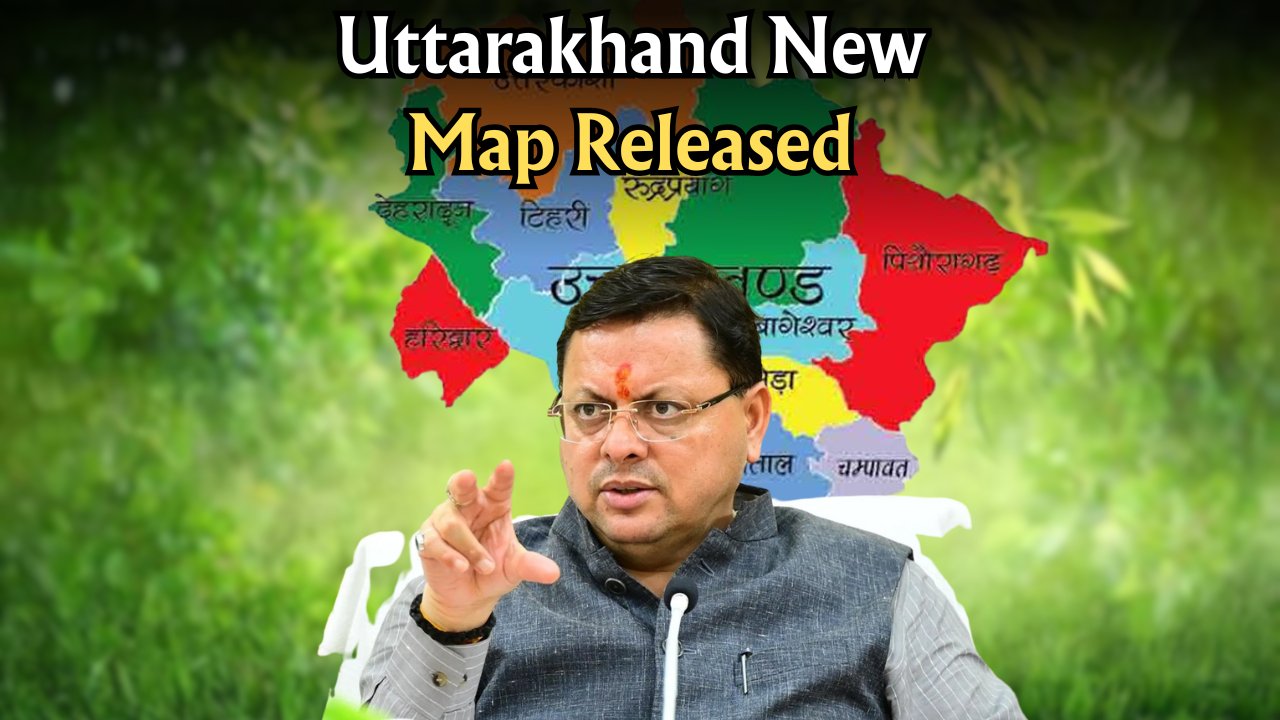
Uttarakhand’s New Map : Uttarakhand has received a fresh geographical update after nearly two decades. For the first time in 17 years, the Survey of India has officially released a revised map of Uttarakhand, marking a significant administrative and developmental milestone for the Himalayan state. This move is expected to bring clarity in regional planning, land management, and infrastructure development across all 13 districts of the state.
Why a New Map Was Needed
Uttarakhand, carved out of Uttar Pradesh in 2000, had its official boundaries defined long ago. However, changes in district boundaries, expansion of towns, construction of new roads, and natural changes in the terrain made the old maps outdated. The need for a modern, accurate, and updated map was essential to:
 ‘One State, One RRB’ Scheme to Be Implemented from May 1 – What It Means for Bank Customers!
- Reflect recent administrative changes and new townships
- Support disaster management and planning in ecologically sensitive areas
- Help infrastructure development including roads and bridges
- Define accurate boundaries for land ownership and dispute resolution
- Integrate GPS and satellite-based data for better navigation and planning
Key Features of the New Uttarakhand Map
The latest map released by the Survey of India includes a range of new features and updates that align with modern geospatial standards.

- Updated district boundaries and municipal zones
- Inclusion of new roads, tunnels, and bridges constructed over the last decade
- Mapping of forest covers, rivers, and glacial zones
- Use of high-resolution satellite imagery and drone surveys
- Incorporation of seismic and disaster-prone zones for planning
- Demarcation of tourism hubs and eco-sensitive areas
- Enhanced clarity on inter-state and inter-district boundaries
Major Updates in Districts and Regions
The new map features substantial updates for each of the 13 districts in Uttarakhand. Here’s a district-wise snapshot of notable changes:

| District | Key Update Highlighted | New Inclusions | Boundary Changed |
|---|---|---|---|
| Dehradun | New road networks, urban zones added | IT Park, Smart City zones | Yes |
| Haridwar | Expansion of industrial zones, clearer Ganga stretch | SIDCUL areas, Kumbh Mela site | Yes |
| Nainital | Tourism hotspots refined, forest lines redrawn | Nainital Lake buffer zones | Slightly |
| Almora | Rural settlements and village routes added | Updated block lines | No |
| Chamoli | Landslide-prone zones and glacial areas marked | Kedarnath trekking routes | Yes |
| Pauri Garhwal | Hill roads and eco-sensitive zones updated | Dense forest buffer | Yes |
| Uttarkashi | Gangotri route, river maps and terrain elevations updated | Seismic risk areas | Slightly |
| Tehri Garhwal | Dam-influenced boundaries, tunnels included | Tehri Dam impact zone | Yes |
| Rudraprayag | Char Dham project realigned in the map | Road network from Sonprayag | Yes |
| Pithoragarh | Border areas and trekking routes marked in detail | Indo-Nepal boundary line | No |
| Champawat | Inter-district roads and rail line project added | Updated ward details | No |
| Bageshwar | Urban expansion and natural reserves mapped | Bagnath Temple zone | Slightly |
| Udham Singh Nagar | Agricultural and urban regions redrawn | Industrial belt highlighted | Yes |
Benefits of the New Map for Development
The updated Uttarakhand map will be a critical tool for multiple stakeholders including government bodies, environmental planners, tourists, and citizens.
For Government and Planners:
- Accurate reference for new road and bridge construction
- Helps implement policies based on terrain and population clusters
- Assists in flood and disaster preparedness with updated terrain data
For Tourists and Travel Industry:
- Better trail and pilgrimage routes (e.g. Char Dham Yatra)
- Clear demarcation of tourist-friendly and restricted areas
- Updated navigation for remote trekking paths and villages
For Citizens and Landowners:

- Accurate property lines and landholding boundaries
- Dispute resolution made easier with official boundaries
- Useful for land registration, mutation, and revenue records
See more : New Expressway Alert
Technological Advancements in the Survey
The preparation of the new map saw the use of modern geospatial technology. The Survey of India adopted the following advanced tools:
| Technology Used | Purpose | Benefit to Uttarakhand Mapping |
|---|---|---|
| Satellite Imagery | Base layer for updated terrain | Real-time land and forest data |
| LiDAR (Light Detection) | Elevation profiling in hilly areas | Precision in mapping remote terrain |
| Drone Surveys | On-ground real-time verification | Better village-level accuracy |
| GIS Integration | Overlay of infrastructure & population data | For development & urban planning |
| High-Precision GPS | Accurate positioning and boundary mapping | Reduced discrepancies in property lines |
What This Means for Future Projects
The release of the new Uttarakhand map sets the foundation for streamlined development. Here’s what lies ahead:
- More efficient land acquisition and compensation processes
- Enhanced disaster risk reduction through zonal mapping
- Boost to eco-tourism and sustainable development planning
- Clearer land ownership records to reduce legal disputes
- Better execution of schemes like Char Dham Road Project, Smart City, etc.
Where to Access the New Map
The updated map is now officially available through:
- Survey of India’s official website
- Uttarakhand State Government portal
- Offline offices of district collectors and land records department
Printed versions are also expected to be available in select government offices and land departments for legal and documentation purposes.

After a long wait of 17 years, the release of the new Uttarakhand map by the Survey of India is a crucial step toward better governance, accurate development planning, and enhanced disaster management. This detailed and technologically-backed update will greatly benefit state administration, citizens, tourists, and businesses alike. With modernization as its core, Uttarakhand’s new map is not just a geographical update—it’s a roadmap to a better future.


